
Sunrise, sunset, golden hour and daylight hours for Los Angeles, California
☀ Best Places to Watch Sunrise & Sunset in Los Angeles
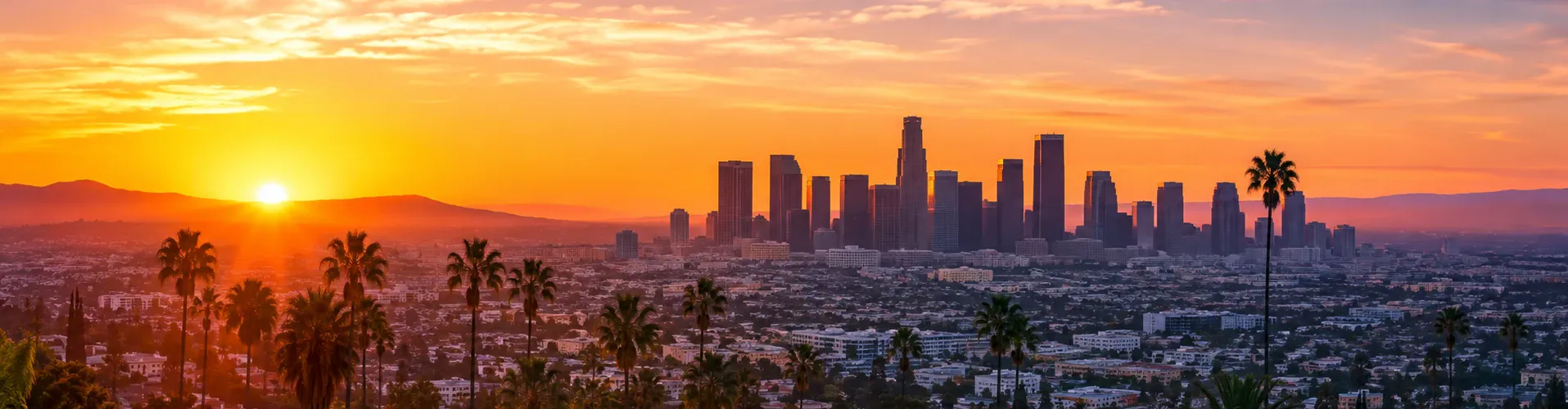
Los Angeles runs up against the Pacific along its western edge, so the split between the city's best viewing spots is a coastline-versus-hills one: the open Pacific coastline — Malibu, Santa Monica, Venice — faces west and catches the sun going down over open water, while the elevated overlooks in the hills above the flatlands, like Griffith Observatory, Elysian Park, and Runyon Canyon, look back east over downtown and the basin and are the better bet for sunrise. Los Angeles observes Pacific Time (PST/PDT), and like most places away from the equator, its earliest sunset and latest sunrise don't line up with the December solstice: the earliest sunset falls in early December, while the latest sunrise by the clock occurs in late October, just before daylight saving time ends.
Griffith Observatory Sunrise
Griffith Park is open daily from 5am, well before sunrise year-round, and the hilltop grounds around the Observatory look out over downtown LA, the Hollywood Sign, and — on clear mornings — as far as Catalina Island. The seasonal DASH shuttle into the park doesn't start early enough for a pre-dawn visit, so driving, biking, or rideshare is the practical way up before dawn. Parking is available in the Griffith Park area, but availability varies by time and day.
Elysian Park – Angel's Point Sunrise
A quieter alternative to Griffith, this city park just north of Downtown LA is open sunrise to sunset, so it's genuinely accessible for early risers. Angel's Point, a short walk up from the parking areas, overlooks Dodger Stadium and the downtown skyline. Reachable by car via Elysian Park Drive, or a short ride from the Chinatown or Downtown area — check current park conditions before a pre-dawn visit, since access and trail status can change.
Runyon Canyon Sunrise
One of LA's most-hiked trails, officially open sunrise to sunset, climbing out of Hollywood into the hills with views back over the city as the light comes up. The Indian Rock and Inspiration Point overlooks are the usual sunrise stops. Nearest transit: Hollywood/Highland Red Line station, then a short walk to the Fuller Ave trailhead. Check the park's current alerts before heading up — sections of trail have been closed in the past due to fire damage.
El Matador State Beach, Malibu Sunset
A cliffside beach off Pacific Coast Highway known for its sea caves and towering rock formations, which turn into silhouettes as the sun drops into the ocean behind them. A stairway leads down from the small clifftop lot (open until sunset, with a parking fee — free street parking is available along PCH if the lot is full). Metro's 134 bus runs along PCH between Santa Monica and Malibu, but doesn't reach out as far as El Matador itself, so driving is generally the most practical option.
Palisades Park & Santa Monica Pier Sunset
Palisades Park's bluffs run along Ocean Avenue with an open, unobstructed line over the water, while the pier below puts you at sea level with the Ferris wheel lit up as a foreground. Nearest transit: Metro E Line to the Downtown Santa Monica station, then about a 10-minute walk to either the bluffs or the pier.
Venice Beach & Venice Pier Sunset
A wider, less manicured stretch of sand than Santa Monica, with the pier giving an open, unobstructed view straight out over the water — a favorite for silhouette shots of the boardwalk's palm trees and muscle-beach crowd against the sky. Nearest transit: Metro E Line to Downtown Santa Monica, then a local bus south toward Venice — check current routes and schedules before you go.
◉ Best Times for Sun Photography
📷 Quick Photography Tips
Los Angeles operates on PST (UTC−8) in winter and PDT (UTC−7) during daylight saving time, which runs from the second Sunday in March to the first Sunday in November — worth double-checking against whichever sunrise/sunset table you're using so the offset matches.
For sunrise and sunset times in any other city worldwide, visit our sunrise/sunset calculator on the home page.
✓ Your Los Angeles Sunrise & Sunset Checklist
Before You Go
- Check today's exact sunrise/sunset times above, and confirm whether you're on PST or PDT for the date you're planning
- For coastal spots from May to July, check for morning marine layer — a clear forecast inland doesn't guarantee a clear horizon at the beach
- Check current opening hours, trail alerts, and closures for Runyon Canyon, Griffith Park, and Elysian Park before a pre-dawn visit — conditions can change, including after wildfires
- Small lots at spots like El Matador fill early on clear-weather weekends — have a backup plan for parking
What to Bring
- A tripod for the coastal spots, where evening wind off the water is more likely
- A longer lens for skyline-compression shots from Griffith Observatory or Elysian Park; a wide-angle for El Matador or the Venice boardwalk
- Water and sun protection — Southern California hikes heat up fast even in the early morning
- Cash or a card for parking fees at spots like El Matador, and a transit pass if you're routing through the Metro E Line
On the Morning or Night
- Arrive 30–45 minutes before sunrise or sunset to give yourself time to find a position and set up
- Shoot RAW and bracket exposures to hold detail in both the sun and the water, skyline, or rock formations
- At Griffith Observatory and Elysian Park, viewpoints fill up fast on weekends — get there early if you want an unobstructed spot
- At El Matador, check the tide and surf before descending, and never enter sea caves or exposed rock areas if waves can reach them