
What Is Alpenglow and Why Does It Happen?
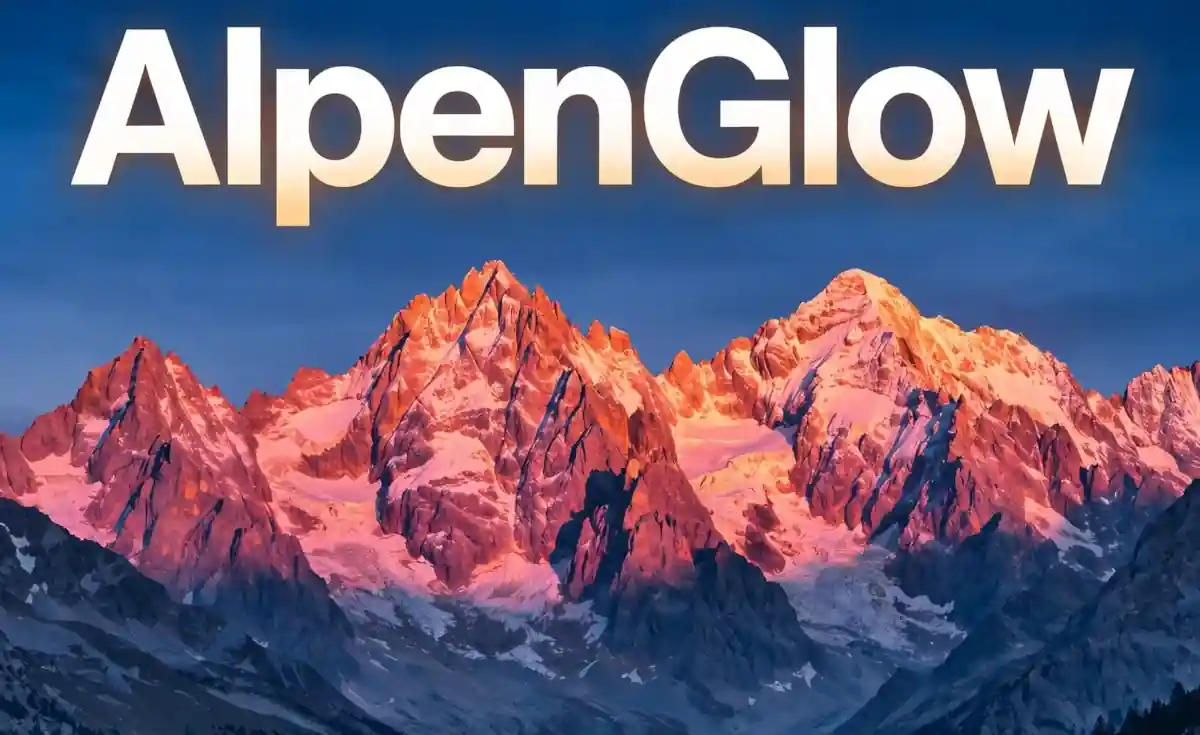
Alpenglow is the pink, orange or red glow that reappears on mountain peaks soon after sunset or before sunrise. It happens because sunlight that has crossed a long stretch of atmosphere is richer in orange and red, and high peaks keep catching it after the Sun has set for people in the valley. Later, a softer afterglow comes from diffuse light scattered through the twilight sky.
Swipe sideways to see the full table.
| Question | Short answer |
|---|---|
| What is it | A rosy glow on mountain peaks and sometimes clouds, near sunrise and sunset |
| Colours | Evening: more orange and red. Morning: more pink and purple |
| What causes it | Reddened direct sunlight on peaks, then diffuse twilight light after direct sunlight has gone |
| Stages | Three: usual sunset colours, alpenglow proper and afterglow |
| When it appears | A few minutes either side of sunset or sunrise, with the afterglow lasting longer |
| Sunrise or sunset | Much less common at sunrise than at sunset |
| Where to look | On peaks on the side of the sky opposite the Sun |
What is alpenglow?
Alpenglow is the occasional reappearance of sunset colours on a mountaintop soon after sunset, and a similar effect before sunrise.
So, what is alpenglow? The word comes from the Alps, where the glow on snow-covered peaks has long been admired. The American Meteorological Society defines it as the reappearance of sunset colours on a mountaintop soon after sunset, and a similar effect before sunrise.
The terminology varies. Some people use alpenglow for any reddish light on peaks near sunrise and sunset. Others reserve it for the glow that follows the usual sunset colours, and Atmospheric Optics notes that some use it only for the rosy light on mountains after sunset or before sunrise, when they are lit purely by bright twilight. This article follows the meteorological description, which treats alpenglow as a sequence of stages.
Why does alpenglow happen and how does it form?
Reddened direct sunlight keeps reaching high peaks after the Sun has set for the valley, and soft diffuse light takes over afterward.
Why the light is reddish
Air molecules scatter shorter blue and violet wavelengths more strongly than longer red wavelengths. This is Rayleigh scattering. Along the long path that sunlight takes through the atmosphere near sunrise and sunset, much of this shorter-wavelength light is scattered out of the direct beam. The light that reaches the mountains is richer in orange and red.
Why peaks stay lit after sunset
The horizon is lower for someone standing on a mountain than for someone standing in a valley, and the curve of Earth means the Sun sets later at greater height. A summit can therefore still be in direct sunlight after the Sun has disappeared for an observer below. The AMS notes that the alpenglow boundary can first appear hundreds of metres below the summit, then climb upward and fade as Earth’s shadow rises.
Direct light, then diffuse light
These are two different physical situations. While a peak is still in direct sunlight, the reddened beam lights it with fairly sharp shadows. After the peak enters Earth’s shadow, the light comes from the twilight sky, scattered through the atmosphere. This diffuse light is softer, and the boundary of the glow is vaguer.
What are the three stages of alpenglow?
The AMS describes first the usual sunset colours, then alpenglow proper in direct light, and finally a softer afterglow in diffuse light.
Swipe sideways to see the full diagram.
Swipe sideways to see the full table.
| Stage | Light on the peak | What it looks like |
|---|---|---|
| 1. Usual sunset colours | Direct sunlight, with the Sun very low | The peak shows its normal sunset colours |
| 2. Alpenglow proper | Still direct sunlight, a few minutes after the first colours fade | Colours are purer and often pinker, and the lit area shrinks toward the summit |
| 3. Afterglow | No direct sunlight, only diffuse light from the twilight sky | A softer glow with a vaguer boundary, from yellow to purple. It lasts longer than the first two stages |
The colours also differ between morning and evening. The AMS says evening colours tend to be more orange and red, while morning colours are more pink and purple, and that alpenglow appears much less common at sunrise than at sunset.
Alpenglow and the Belt of Venus can occur together, but they are different. Alpenglow is light on mountains, while the Belt of Venus is a pink band of twilight sky opposite the Sun, above Earth’s shadow.
What affects how vivid alpenglow is?
Clear air toward the Sun, snow cover, the shape and height of the peaks and the state of the atmosphere all matter.
- Snow and ice: they reflect the reddish light strongly, which is why alpenglow is most striking on snow-capped peaks.
- Peak height and orientation: tall peaks facing the Sun keep direct light longest.
- A clear horizon on the Sun’s side: thick cloud blocks the light before it reaches the mountains.
- The state of the air: aerosols such as dust, haze, smoke or volcanic particles can change twilight colours, but the effect depends on particle size, amount and height. Too much haze or smoke can dull the glow.
Alpenglow, golden hour and the Belt of Venus
Alpenglow is the glow on mountains. Golden hour is warm direct sunlight, and the Belt of Venus is a pink band in the sky.
Swipe sideways to see the full table.
| Phenomenon | What it is | Where it appears | When it appears |
|---|---|---|---|
| Alpenglow | Reddish or pink light on mountains, in stages | On peaks opposite the Sun | Stages 1 and 2 last a few minutes around sunset or sunrise. Stage 3 afterglow lasts longer |
| Golden hour | A period of warm, low-angle direct sunlight | Wherever the Sun is low | After sunrise and before sunset |
| Belt of Venus | A pink band of twilight sky above Earth’s shadow | Opposite the Sun, near the horizon | A few minutes before sunrise or after sunset |
| Earth’s shadow | A dark blue-grey band below the Belt of Venus | Low on the horizon opposite the Sun | Just after sunset or before sunrise |
You may also see crepuscular rays at the same time of day.
When and where to see alpenglow
Look at mountains on the side of the sky opposite the Sun, from just before sunset or sunrise through the twilight that follows.
At sunset, face east toward mountains whose west-facing slopes catch the last light. At sunrise, face west toward east-facing slopes. The first stages last only a few minutes, and the afterglow lasts longer, so be in place early and keep watching. Timing varies with your latitude, the season and the peaks. Check exact times with our sunrise and sunset calculator, and see which way the Sun rises in What Direction Does the Sun Rise?
Alpenglow at sunset
Sunset is the better bet. Evening alpenglow is more common and tends toward orange and red.
Alpenglow at sunrise
Sunrise alpenglow appears to be much less common and tends toward pink and purple. Be in position well before the Sun comes up.
Do not look at the Sun itself while it is still above the horizon. You do not need to, because the glow is on the opposite side of the sky.
You do not need the Alps. Any high ground, from the Rockies to the Himalayas to a local ridge, can show the effect, and it is strongest with snow. Without mountains, you may still see a rosy glow on clouds and tall buildings, or the Belt of Venus above the horizon.
How to photograph alpenglow
- Arrive well before sunset or sunrise, and stay through the twilight.
- Face the mountains on the opposite side from the Sun.
- Use a tripod, because exposures get longer as the light fades.
- Expose for the lit peaks and check that the pinks are not blown out.
- Include foreground such as a lake, trees or a trail, which gives the glow scale.
Planning a trip for the glow? Check sunrise and sunset times for any location with our sunrise and sunset calculator, then read about golden hour.
Frequently asked questions about alpenglow
What is alpenglow?
Alpenglow is the pink, orange or red glow that reappears on mountain peaks, often snow-covered, soon after sunset or before sunrise. Meteorologists describe it in stages, from the usual sunset colours to a fainter glow after direct sunlight has gone. Some people use the word more loosely for any reddish light on peaks.
Why does alpenglow happen?
Sunlight that has crossed a long stretch of atmosphere has lost much of its shorter-wavelength light, so it is richer in orange and red. Peaks stay in this direct light after the Sun has set for people below. Later, the peaks glow from softer, diffuse light scattered through the twilight sky.
What are the stages of alpenglow?
The American Meteorological Society describes three. First come the peak’s usual sunset colours. Next is alpenglow proper, when peaks are still in direct sunlight and look purer and pinker. Last is the afterglow, a softer glow from diffuse light after direct sunlight has gone.
Does alpenglow happen at sunrise or sunset?
Both, but it appears to be much less common at sunrise than at sunset, according to the American Meteorological Society. Morning colours tend to be pinker and more purple, while evening colours are more orange and red.
Is alpenglow the same as golden hour?
No. Golden hour is a period of warm, low-angle direct sunlight, which can last up to an hour. Alpenglow is a brief glow on mountains around and just after sunset or before sunrise. The two often happen back to back, and golden hour is a good time to get into position.
What is the difference between alpenglow and the Belt of Venus?
Alpenglow is light on mountains, snow or clouds. The Belt of Venus is a pink band of twilight sky opposite the Sun, above the dark blue-grey band of Earth’s shadow. The two can occur together, but they are different things to look at and have different geometry.
Can you see alpenglow without mountains?
In the strict sense, alpenglow is a mountain effect, so you need peaks or high ground. Without them, you may still see reddish light on clouds, hills and tall buildings, or the Belt of Venus in the sky. Snow and ice help make the glow easier to see.
How long does alpenglow last?
The first stages last only a few minutes. The later afterglow lasts longer, but the timing is not fixed. It depends on your latitude, the season, the height and slope of the peaks and the clarity of the air, so be in place early and watch the whole twilight.
Which direction should I look for alpenglow?
Look toward mountains on the side of the sky opposite the Sun. At sunset, face east toward peaks whose west-facing slopes are catching the last light. At sunrise, face west toward east-facing slopes. A clear horizon on the Sun’s side makes the glow stronger.
Sources and further reading
- Alpenglow, AMS Glossary of Meteorology: the three stages, colours and sunrise versus sunset.
- Alpenglow and the Belt of Venus, Atmospheric Optics: how the term is used.
- The phenomena that brighten dawn and dusk, University of Colorado Boulder: the Belt of Venus and Earth’s shadow.
- WMO International Cloud Atlas, Alpenglühen: mountains staying in direct sunlight after the Sun has set for lower observers.