
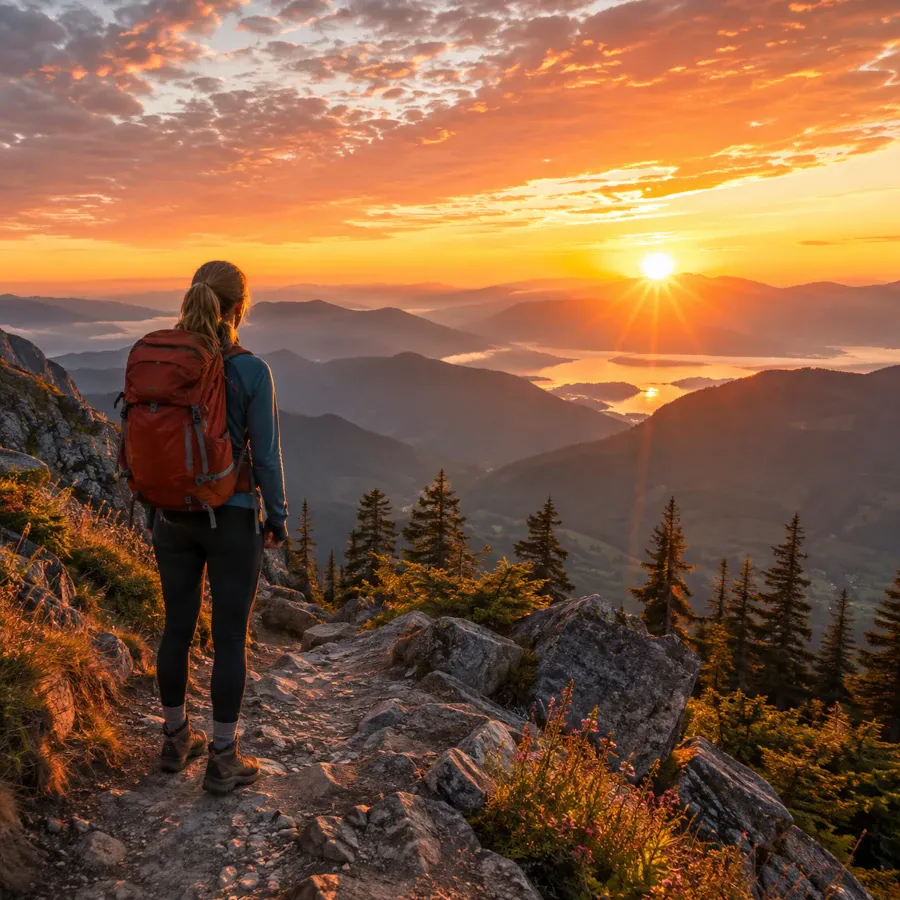
There's something different about a sunrise hike. The trail is quiet, the air is cool, and you get to watch the world wake up from somewhere high enough to see it happen.
Most people experience the outdoors in the middle of the day, when trails are crowded and the light is flat. Sunrise flips that entirely — you trade a bit of sleep for a version of the outdoors that almost nobody else bothers to see. If you've never done one, or you're trying to figure out how to do it well, here's everything you need to know to choose a great sunrise hike and actually enjoy it.
Why Hike at Sunrise
Sunrise hikes have a few things going for them that a midday hike doesn't:
- Fewer people. Most hikers show up after 8 a.m. A sunrise trail is often yours alone, or close to it. Popular viewpoints that feel crowded and rushed at noon can feel like a completely different, quieter place at dawn.
- Better light. The "golden hour" right around sunrise is softer, warmer, and more dramatic than the harsh overhead light of midday. It's the light photographers chase, and it makes even familiar trails look new.
- Cooler temperatures. Especially in warmer months, starting before the sun is up means you avoid the worst of the heat and finish your hike before the day gets uncomfortable.
- A sense of accomplishment before your day even starts. There's a particular kind of satisfaction in reaching a summit while everyone else is still asleep.
- A quieter mind. Without the usual noise of a busy trail, a sunrise hike tends to feel more meditative — as much a mental reset as a physical one.
How to Choose a Good Sunrise Hike
Not every trail makes a good sunrise hike, even if it's a great hike in general. A few things to look for when picking one:
- East-facing viewpoints or open summits. A ridgeline, summit, or overlook works better than a hike that stays in a valley, canyon, or dense forest the whole way, since trees and terrain can block the actual moment of sunrise.
- Distance and elevation gain you're comfortable doing in low light. A hike that's easy at noon can feel a lot harder when you can only see what your headlamp shows you. Pick something a notch easier than usual, especially for your first few sunrise hikes.
- Trail surface and footing. Rooty, rocky, or exposed trails are riskier before sunrise. If it's your first time, pick a route you've done in daylight, or one that's well-marked.
- Trailhead and access hours. Some parks and trailheads have gates that don't open until a set time, or require permits for early entry. Check ahead.
- How exposed the summit or viewpoint is. An open viewpoint gives the best views but can also mean more wind and colder temperatures while you're standing still to watch.
Planning and Timing
The trick to a sunrise hike is working backward from sunrise time, rather than picking a start time that feels reasonable.
- Look up sunrise time for your date and location — this shifts throughout the year, sometimes by an hour or more between seasons.
- Estimate your hiking time using your pace, distance, and elevation gain, then add a 15–30 minute buffer so you arrive before first light, not right as it happens.
- Check the weather and cloud cover. Clear or partly cloudy skies usually make for a better, more colorful sunrise.
- Account for drive time and prep time, not just the hike itself — it's easy to underestimate this and end up rushing.
- Set your alarm accordingly, and lay out your gear the night before so you're not fumbling in the dark.
What to Bring
Pre-dawn conditions are colder and darker than you might expect, even in summer.
- Headlamp, plus spare batteries — a phone flashlight isn't reliable or hands-free enough for a real trail.
- Layers. It's almost always colder before sunrise than after, even on a hot day. A warm layer you can shed once the sun comes up is ideal.
- Traction devices if there's any chance of ice, frost, or dew-slicked rock.
- Water and a snack — easy to skip when heading out before dawn, but worth it on any real distance.
- Phone or camera, and a spare battery if shooting photos — cold weather drains batteries fast.
- A sit pad or light jacket to sit on if you plan to wait a while at the top. Ground is often damp with dew or frost.
Safety Tips
- Tell someone your plan — trail, start time, expected return. This matters more for a solo sunrise hike than most others.
- Stick to trails you know, or ones that are well-marked and easy to follow in low light.
- Watch your footing. Roots, rocks, and drop-offs are much harder to spot with a headlamp than in daylight.
- Be aware of wildlife. Dawn is an active time for a lot of animals — make some noise as you go.
- Have a backup plan. If the trail feels unsafe in the dark, know a shorter or easier alternative.
- Dress for a temperature swing — cold at the start, warm on the climb, cold again once you stop moving.
The best part of a sunrise is often the twenty minutes before the sun crests the horizon — the sky shifting through color — not just the single moment it appears. Get there early enough to watch the whole thing.
On the Trail
- Get to your viewpoint early and give yourself time to settle in before the light starts changing.
- Stay quiet if others are around. Sunrise hikers tend to share an unspoken respect for the moment.
- If you're shooting photos, set up your shot before the light changes — it moves fast once the sun starts coming up.
- Give yourself a few minutes to just watch, without a phone or camera in the way.
- Plan for the hike down. Once the sun is up, the trail will look different, and you may be sharing it with hikers just starting their day.
Common Mistakes to Avoid
- Underestimating how cold it'll be, even in summer and even more so at elevation.
- Cutting it too close on timing, which means missing the best light and rushing the final stretch.
- Choosing a trail that's too ambitious — save long, technical routes for daylight until you're comfortable hiking in low light.
- Forgetting the hike back involves full daylight conditions — and possibly more people, heat, or traffic than you started with.
A good sunrise hike doesn't need to be complicated — it just takes a little planning: the right trail, the right timing, and being prepared for the cold and dark. Once you've done one, it's hard not to want to do it again. There's a version of every trail you already know that looks completely different at dawn, and that alone is worth setting an early alarm for.